
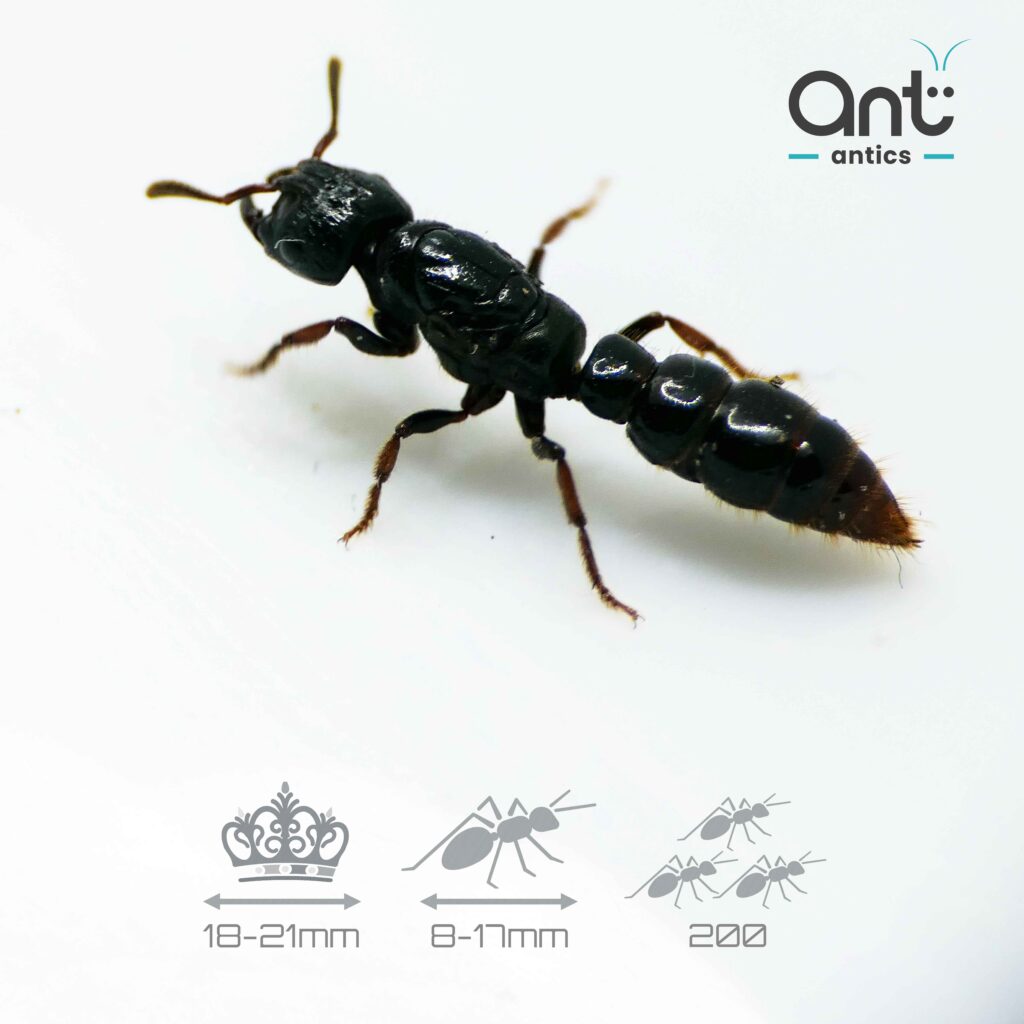
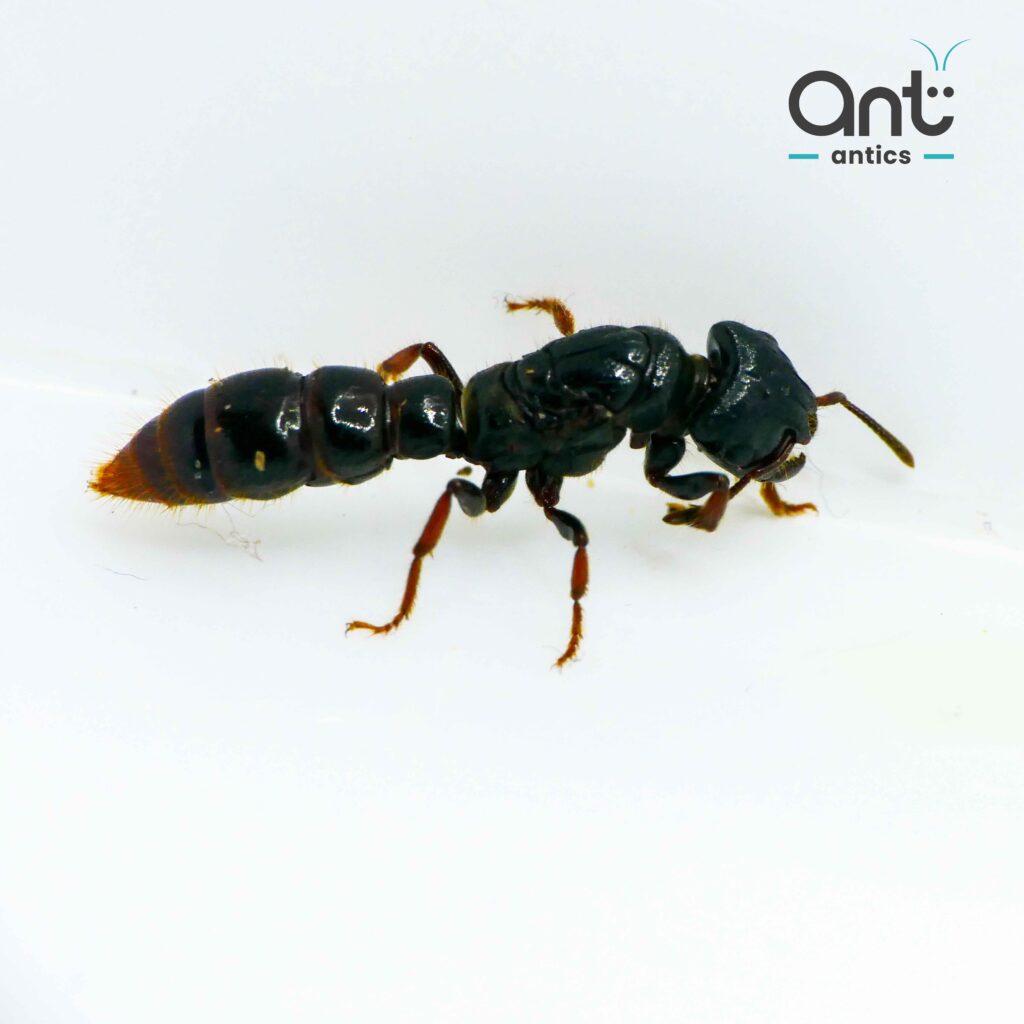
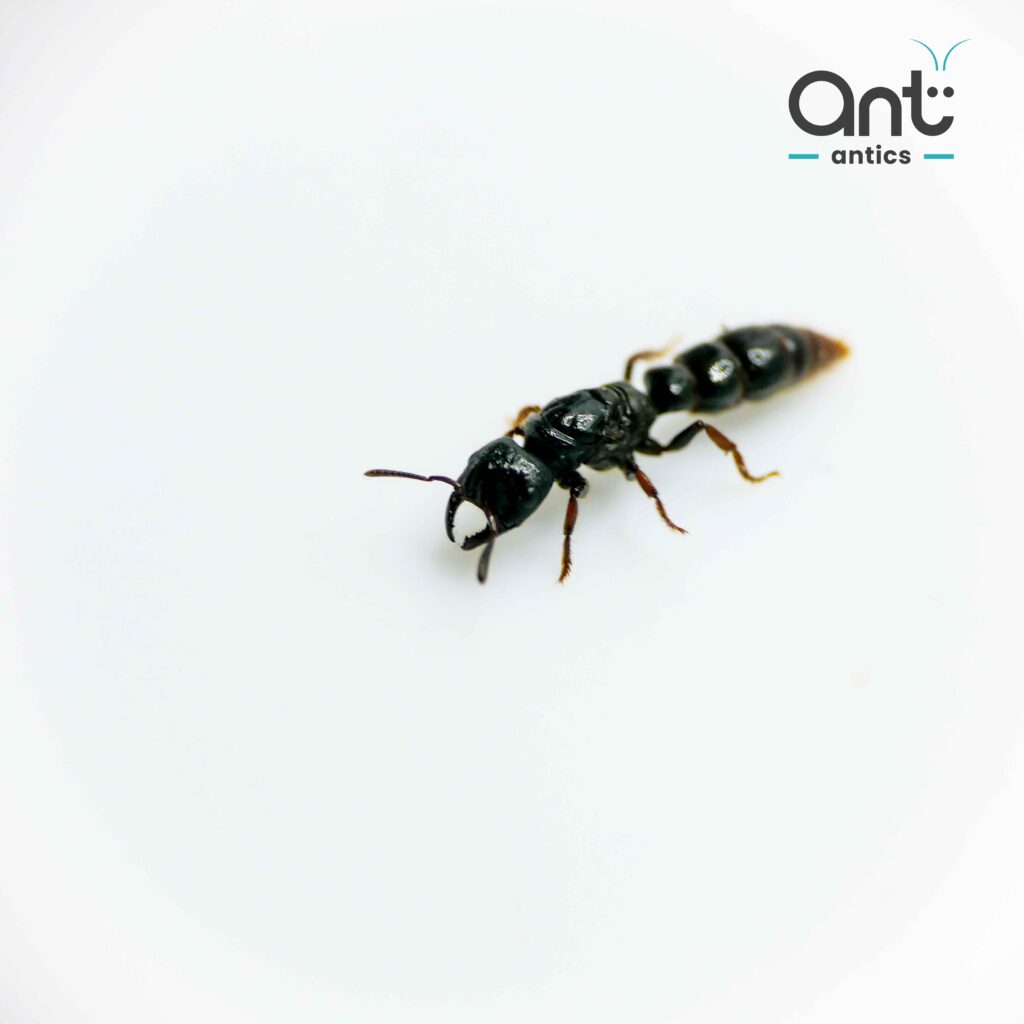
Meet Myopopone castanea: Rare Dracula Ant – Specialist Predator!
Why Myopopone castanea?
Myopopone castanea is the sole species in its genus (Amblyoponinae) and a true specialist. These rare ants nest in rotten wood or under bark across tropical Asia to northern Australia. Long, multi-toothed mandibles and projecting frontal lobes give them an unmistakable profile.
Hunters of beetle larvae:
Colonies prey on large, soft-bodied insect larvae in decaying wood. When prey is too big to drag home, workers may bring their own larvae to the food. In the laboratory, workers also show larval hemolymph feeding – pinching their larvae and licking hemolymph from tiny wounds – a hallmark of dracula ant amblyoponines.
Expert only:
They are shy and clumsy in bright light, abandoning brood if exposed, yet they can deliver a painful sting when handled. This is not a beginner species: plan dark, humid wood nests and a steady supply of suitable soft larvae.
Colony:
- Structure: Often several small nest pockets scattered in the same log
- Castes: Strong queen-worker size difference; workers themselves size-variable
Queen:
- Size: About 13.7 mm total length (measured specimen)
Workers:
- Size: About 7.3 to 8.7 mm total length
- Polymorphism: Continuous size variation (not discrete majors/minors)
Housing:
- Nest types: Rotten wood, tight dark chambers, high humidity
- Climate: Warm tropical conditions; keep nest dark
Hibernation:
- Period: Not required
Diet:
- Primary food: Large soft beetle/wood-borer larvae and similar soft-bodied prey
- Note: Sugar water is not a substitute for their specialised protein hunting
Interaction:
- Sting: Yes – painful sting reported when handled
- Temperament: Shy; seeks cover when exposed to light
Key Stats:
- Queen Size: 13.7mm
- Worker Size: 7.3-8.7mm
- Temperature: Estimated: 22-26°C (Nest)
- Humidity: Estimated: 50-70% (Nest); high humidity dark wood nest
- Diet: Specialist soft larvae (large beetle/wood-borer larvae)
- Colony Size: Estimated: up to several hundred mature workers (often a couple of hundred)
- Diapause: No – tropical Indomalaya/Australasia; keep warm year-round
Ready for the Challenge?
Only experienced keepers should take on Myopopone castanea. If you can offer dark humid wood and the right prey, you will host one of the rarest and most biologically fascinating ants in the hobby.
Reviews
There are no reviews yet.