
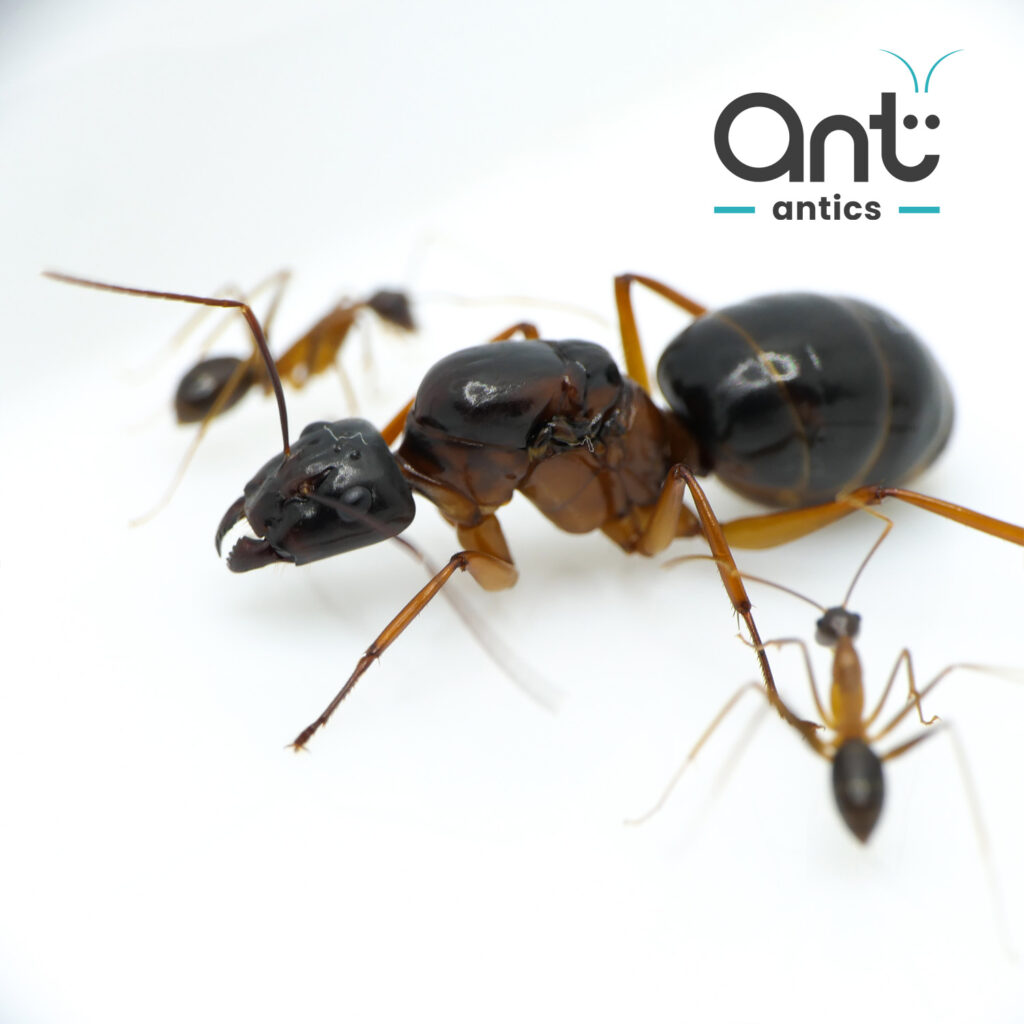
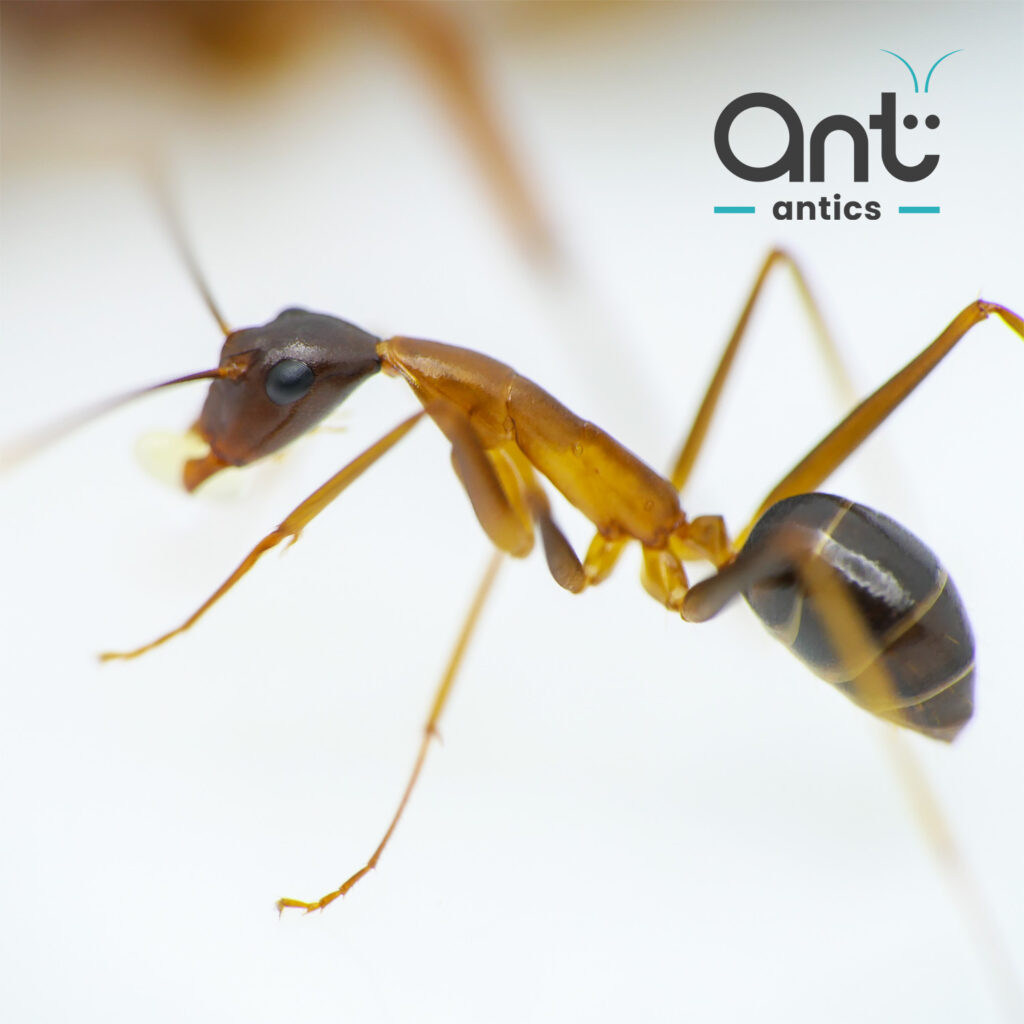
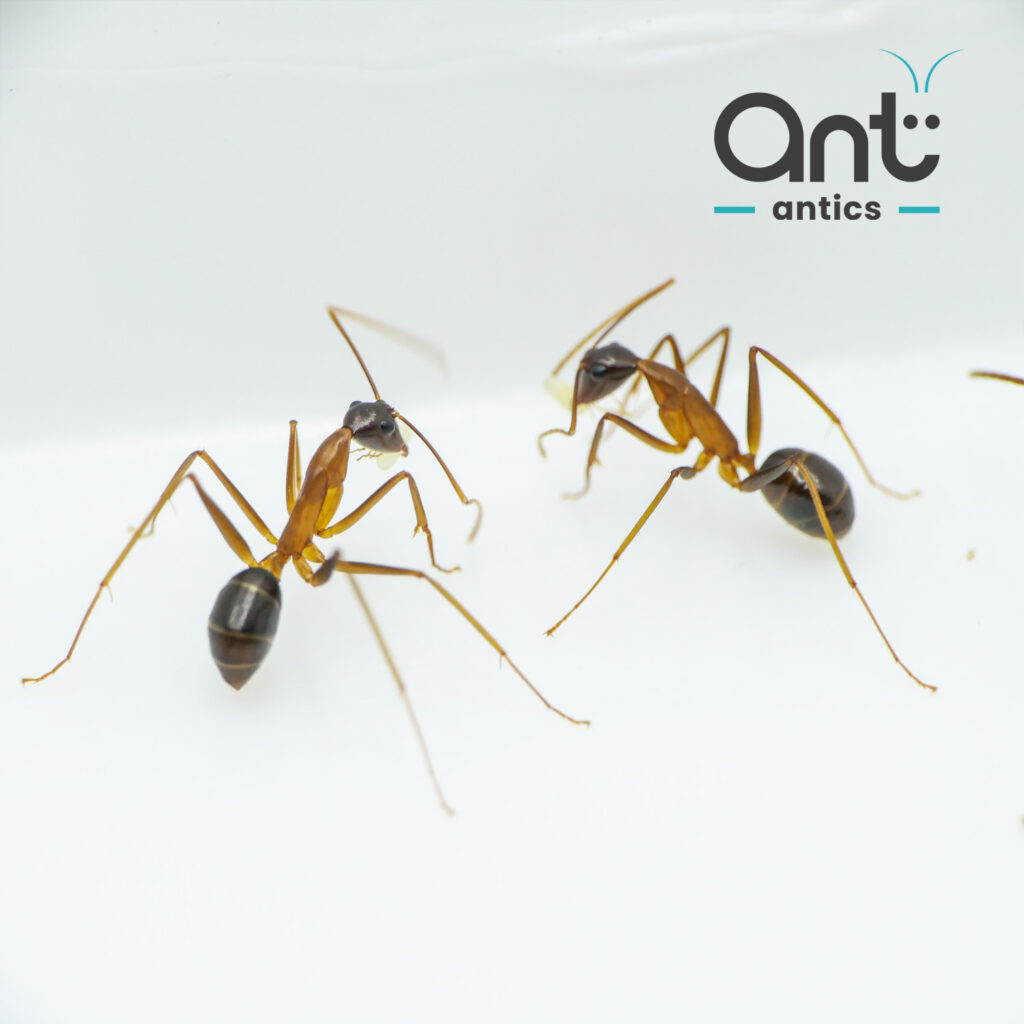
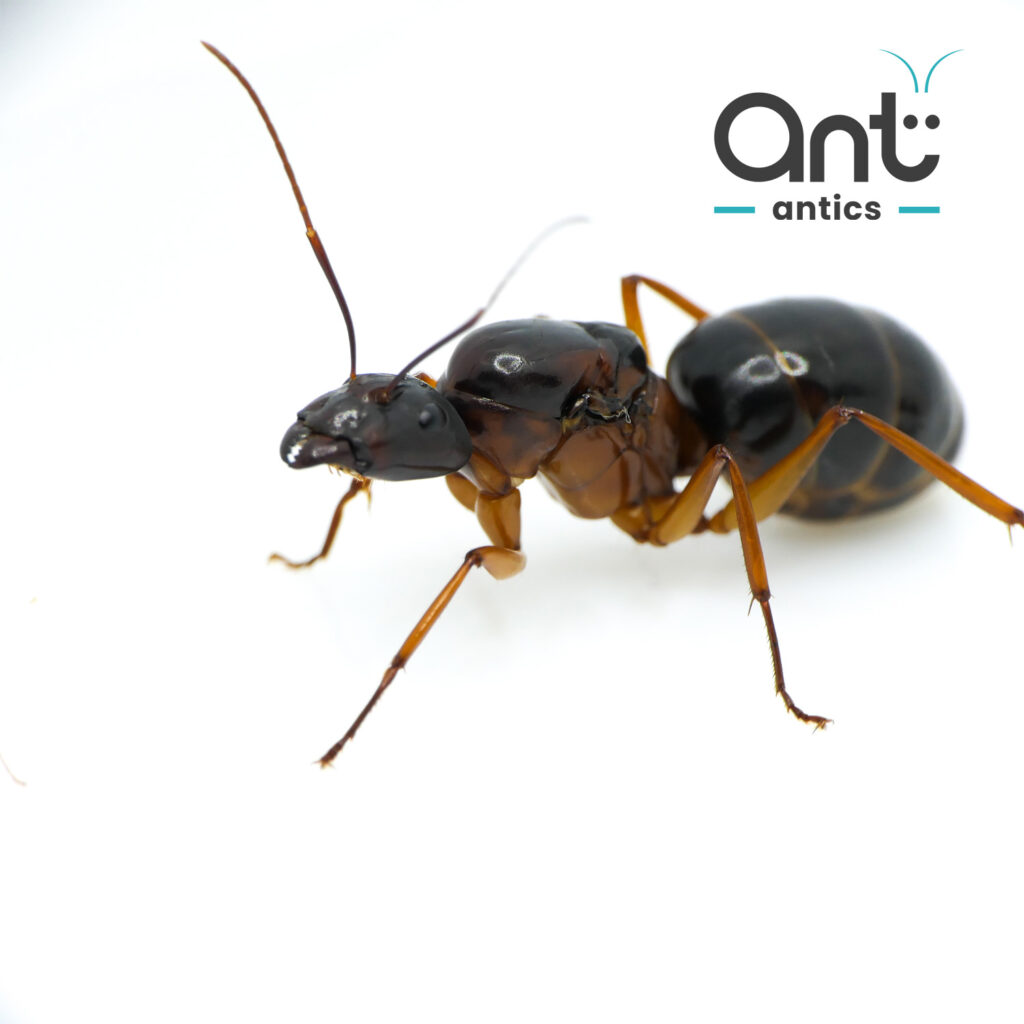
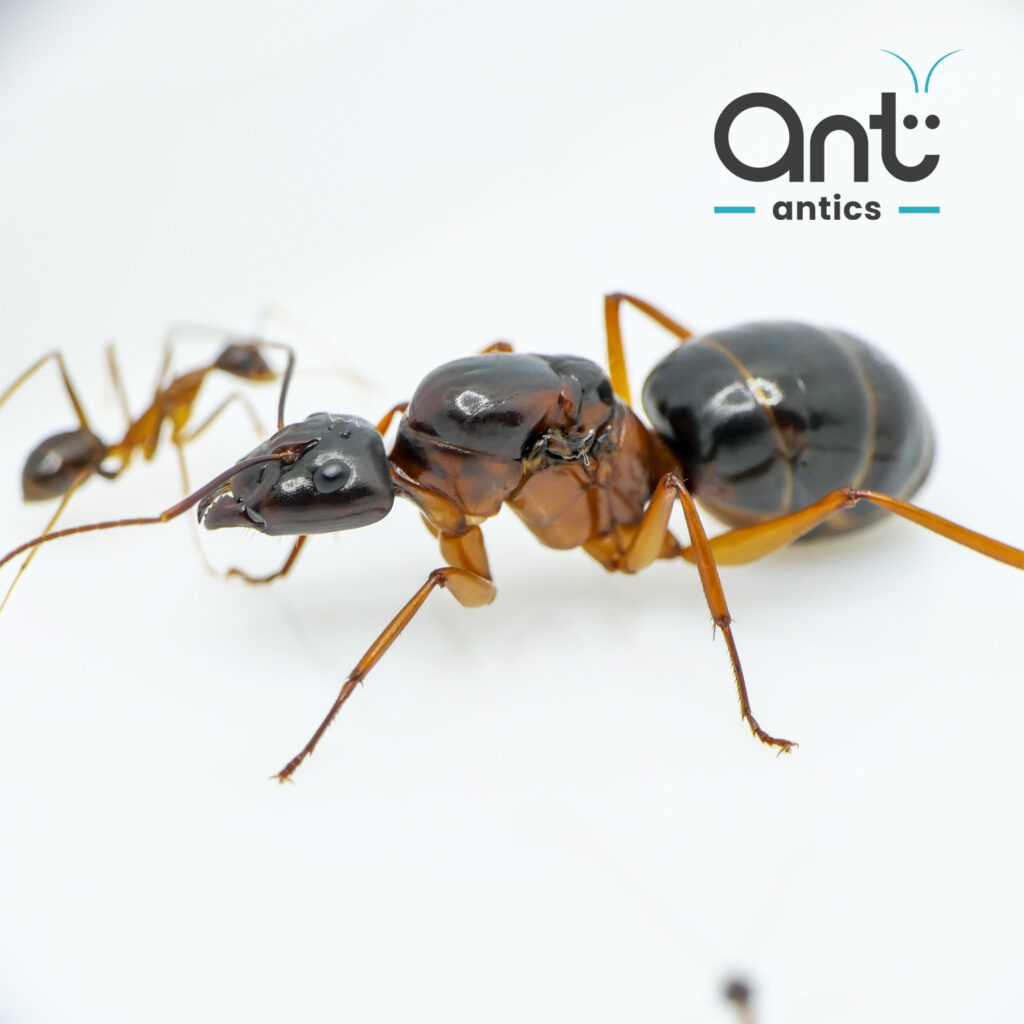
Meet Camponotus festinus: Large Southeast Asian Carpenter Ant!
Why Camponotus festinus?
Camponotus festinus is a large tropical carpenter ant from Southeast Asia (type locality Sarawak, Borneo). Polymorphic brown-to-black workers and a bulky queen create an impressive colony that nests in hollow stems and rotting wood.
Tropical carpenter
Like other Camponotus, they do not eat wood; they excavate galleries for nest space. Expect night activity, honeydew and insect foraging, and steady growth once the first workers appear.
Colony:
- Type: Hobby sources list monogyne
- Founding: Claustral (queen raises first brood on reserves)
- Mature size: Hobby estimate roughly 2,000-4,000 workers
Queen:
- Size: Hobby reports roughly 19-21 mm
- Colour: Castaneous brown to black; bulky thorax
Workers:
- Size: Hobby reports roughly 10-14 mm
- Polymorphic: Yes (minor to major continuum typical of Camponotus)
Development:
- Egg to adult worker: Not firmly published for this species; tropical Camponotus often several weeks to a couple of months (UNVERIFIED)
Housing:
- Nest: Hollow stems and rotten wood in nature; ytong, cork, plaster or acrylic with a wood option suit captivity
- Temperature: Hobby nest targets around 24-28°C; outworld warm
- Humidity: Nest moderately humid; outworld drier
Hibernation:
- Required: No (tropical)
Diet:
- Primary: Honey water or nectar substitutes plus insects (flies, small crickets)
Interaction:
- Sting: No (Formicinae; formic acid)
- Bite: Yes; larger majors can pinch firmly
Key Stats:
- Queen Size: Estimated: 19-21mm
- Worker Size: Estimated: 10-14mm (polymorphic, minors to majors)
- Temperature: Estimated: 24-28°C (Nest)
- Humidity: Estimated: moderate nest; drier outworld
- Diet: Sugars & Insects
- Colony Size: Estimated: 2,000-4,000 workers
- Diapause: No; tropical, keep warm year-round
Ready for a big tropical carpenter?
Keep Camponotus festinus warm year-round, feed sugars and protein, and give them space to grow into a bold display colony.

Reviews
There are no reviews yet.