
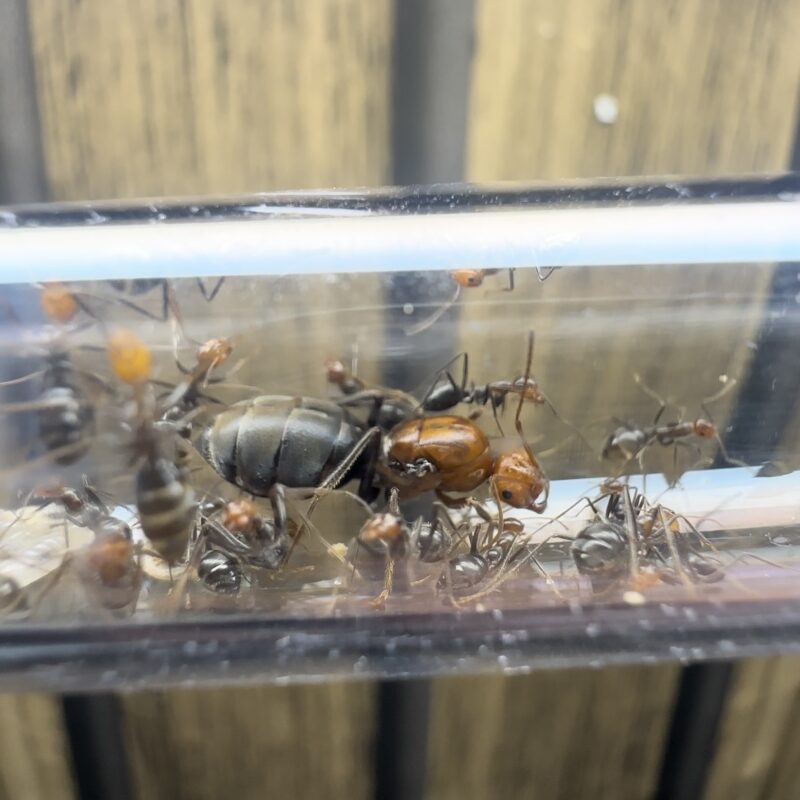
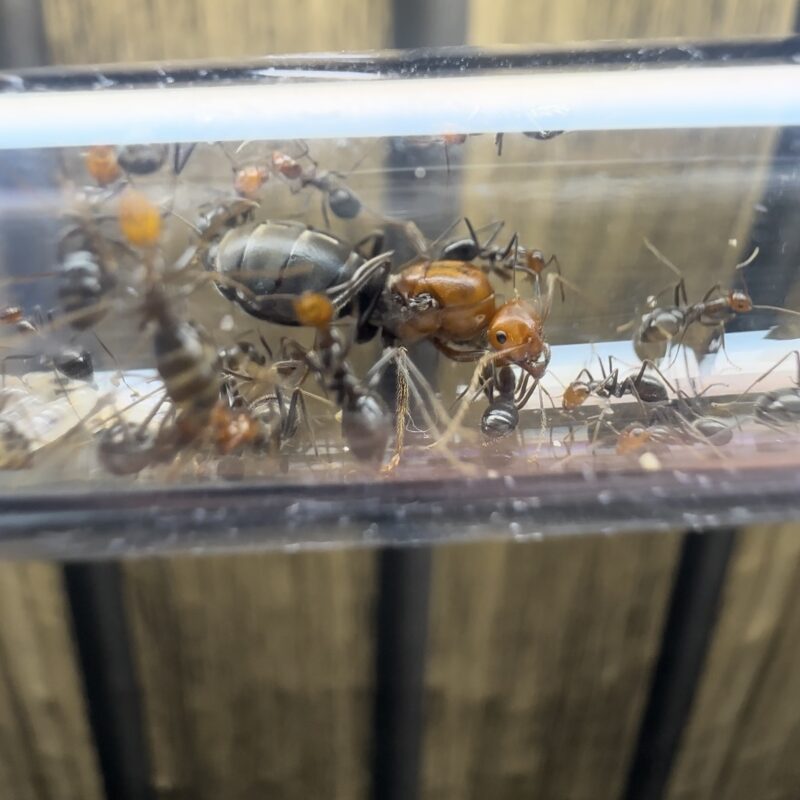
Meet Myrmecocystus mendax: Honey Pot Ant – Mountain and Grassland Repletes!
Why Myrmecocystus mendax?
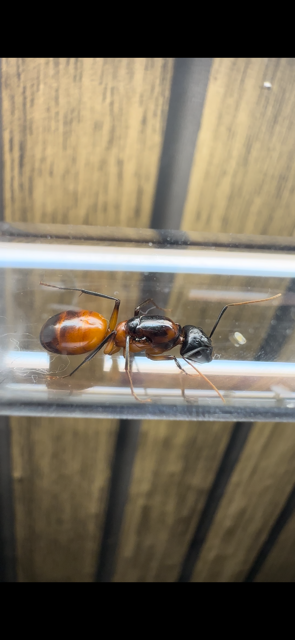
Sold here as a honeypot ant under the trade spelling “mendex”, this stock matches the valid species Myrmecocystus mendax Wheeler, 1908 – a diurnal scavenger and predator of the south-western United States and northern Mexico. Like its cousins, it can raise swollen replete workers that store liquid food deep in the nest.
Active Daylight Foragers
Workers hunt and scavenge arthropods by day and also gather nectar or honeydew. An excavated Arizona nest held nearly 2,800 ants, including hundreds of swollen individuals – a vivid reminder of how central food storage is to this genus.
Variable Social Life
Across its range, colony founding and queen number are not one-size-fits-all: some populations are mainly monogynous, while others show primary polygyny. That flexibility makes them scientifically fascinating and a species to watch carefully as your colony grows.
Colony:
- Type: Population-dependent – monogyny or polygyny both recorded in wild M. mendax
- Notes: Mature nests can reach thousands of individuals including repletes
Workers:
- Size: Head width about 0.9 to 1.9 mm (Snelling 1976)
- Polymorphic: Yes – size variation with specialised repletes
Housing:
- Nest Types: Soil nests with depth for replete chambers; hard or stony soil is common in the wild
- Climate feel: Arid to montane desert-edge habitats
Seasonal activity:
- Wild pattern: Liquid stores help bridge lean seasons; cool rest schedules for captivity remain stock-dependent
Diet:
- Primary: Live and dead arthropods plus nectar or sugar water
- Feeding: Keep protein and sweets available so repletes can develop
Interaction:
- Sting: No (Formicinae)
- Defence: Formic acid and bite
Key Stats:
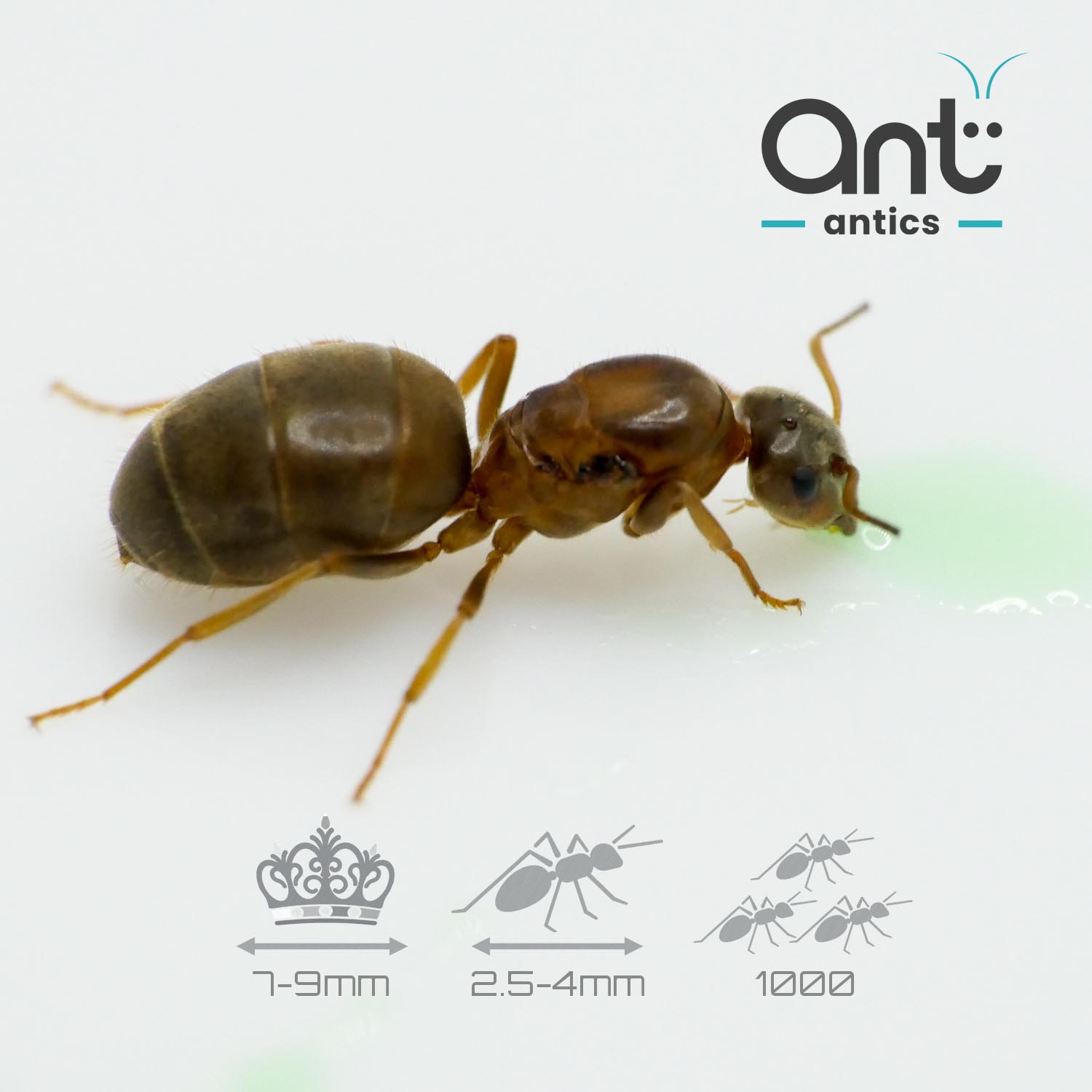
- Queen Size: Unknown (not verified)
- Worker Size: Unknown body length (head width 0.9-1.9mm, Snelling 1976)
- Major Worker Size: Polymorphic, with repletes; body length not recorded
- Temperature: Unknown; warm and dry-adapted
- Humidity: Unknown; dry-adapted, keep a small humid area
- Diet: Insects & Sugars (nectar)
- Colony Size: Thousands of workers including repletes (Conway 2003)
- Diapause: Estimated: seasonal slowdown; diapause unverified
Ready for Mountain Honeypots?
Myrmecocystus mendax brings desert ingenuity into the formicarium. Give them depth, dryness where needed, and a balanced diet – then watch living honeypots take shape.
Reviews
There are no reviews yet.