
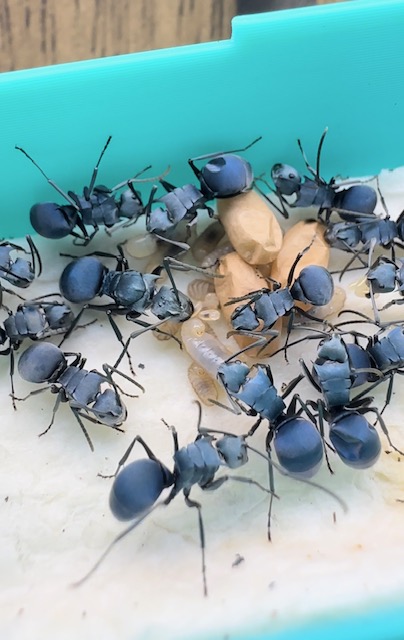
Meet Polyrhachis near cyaniventris: The Blueberry Ant
Why this stock?
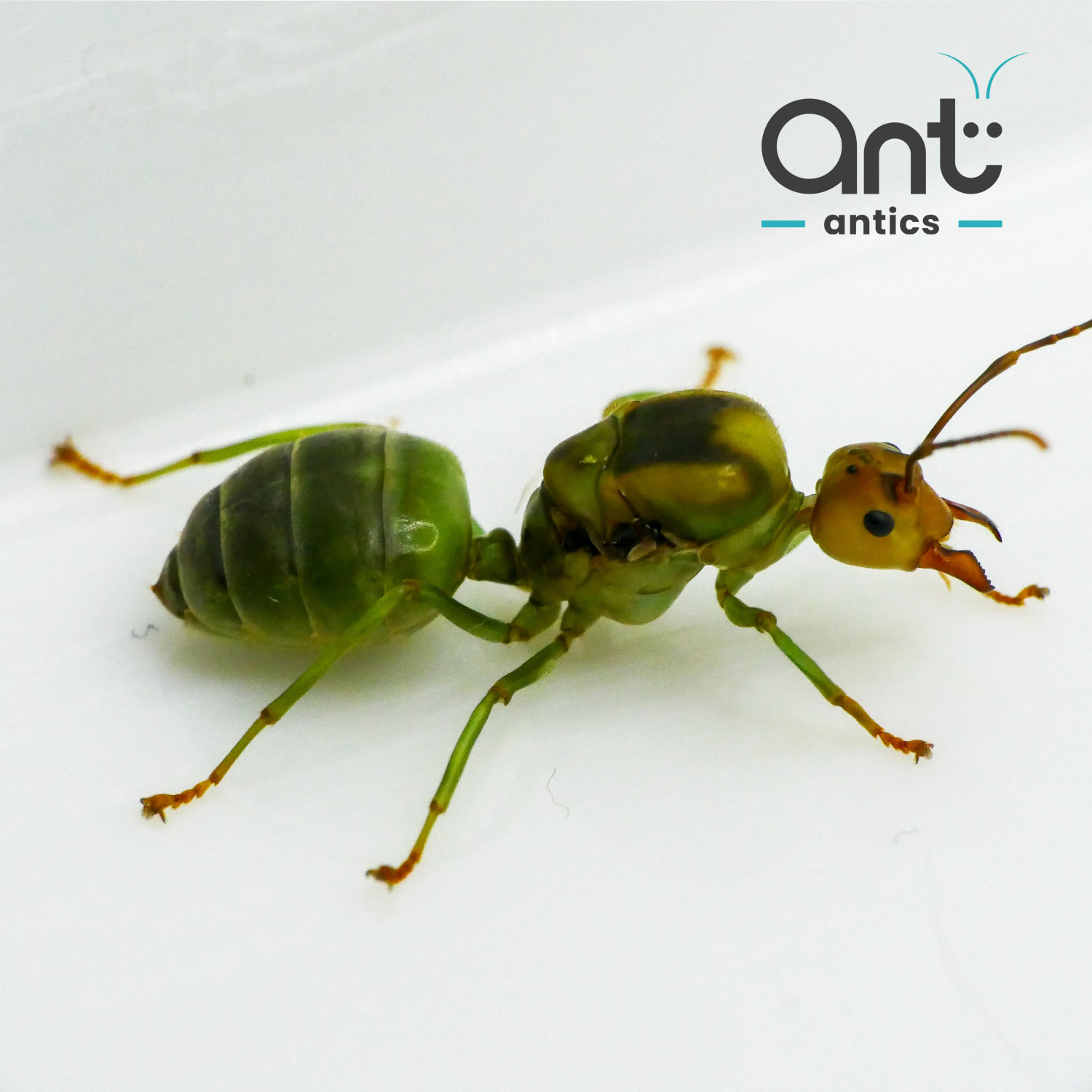
Sold as Polyrhachis cf cyaniventris (Blueberry Ant), this listing points to the Philippine blue beauty Polyrhachis cyaniventris Smith, 1858. True P. cyaniventris shimmers dark metallic blue on the gaster and body – the informal “blueberry” nickname used by keepers – and lives in lowland to low-montane forests and even coconut groves with rich undergrowth.
Spines, Shine, and Twig Life
Workers and queens forage on leaves and twigs by day more often than on open ground. Nests have been found in cavities in branches on the ground and in low vegetation; one recorded nest held about 100 individuals with a single queen. Give them climbing space, humid air, and secure silk-friendly structure if they choose to decorate.
Colony:
- Type: Recorded nest with a single queen and roughly 100 individuals (Alpert observation via Sorger and Zettel 2009)
- Identification: cf. stock – sold as near cyaniventris
Workers:
- Size: About 7.9 to 10.1 mm total length in measured material
- Look: Dark bluish metallic shimmer; spiny Polyrhachis silhouette
Queen:
- Size: About 9.4 to 10.9 mm total length in measured queens
Housing:
- Nest Types: Twig, cork, or cavity nests; arboreal outworld with climbing routes
- Climate feel: Humid forest edge – not a desert setup
Diet:
- Primary: Sugars (honeydew-style) plus insect protein – standard for many Polyrhachis
Interaction:
- Sting: No (Formicinae)
- Defence: Formic acid and spines
Key Stats:
- Queen Size: 9.4-10.9mm (Sorger & Zettel 2009)
- Worker Size: 7.9-10.1mm (Sorger & Zettel 2009)
- Temperature: Unknown (not verified)
- Humidity: Unknown (not verified)
- Diet: Estimated: Sugars & Insects
- Colony Size: About 100 workers (single nest record)
- Diapause: Estimated: No; tropical
Ready for Blue Shine?
If you want colour that stops guests mid-sentence, Polyrhachis near cyaniventris is hard to beat. Offer height, humidity, and a sweet-and-protein menu – then enjoy blueberries that walk.
Reviews
There are no reviews yet.