
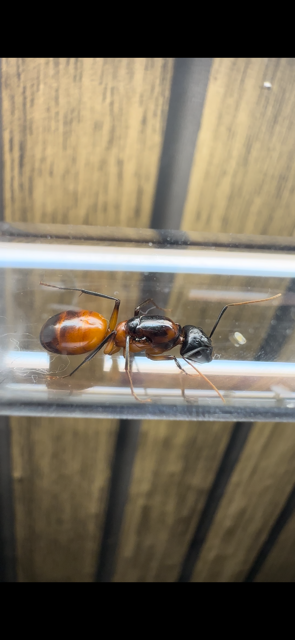
Meet Camponotus ocreatus: Orange Desert Carpenter Ant!
Why Camponotus ocreatus?
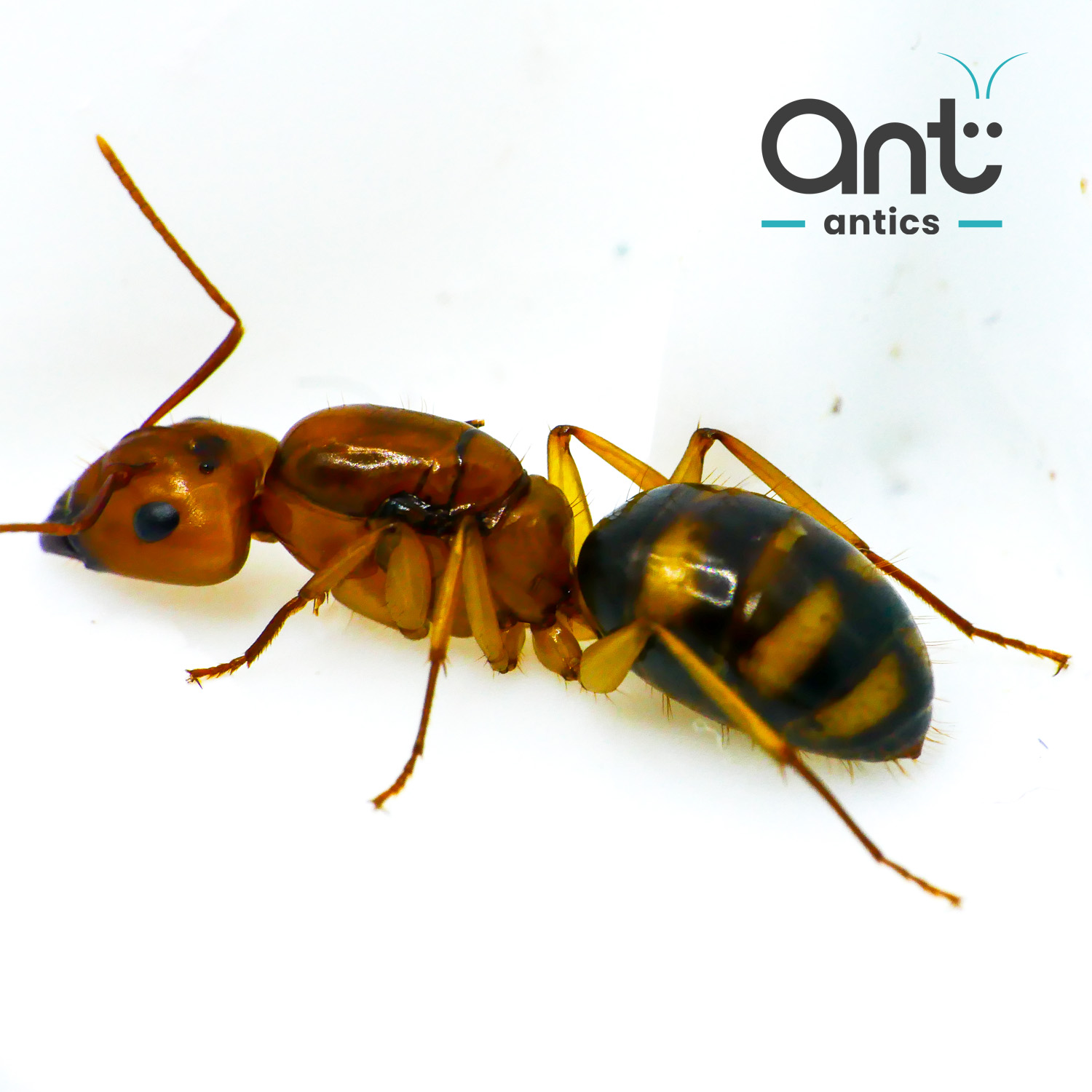
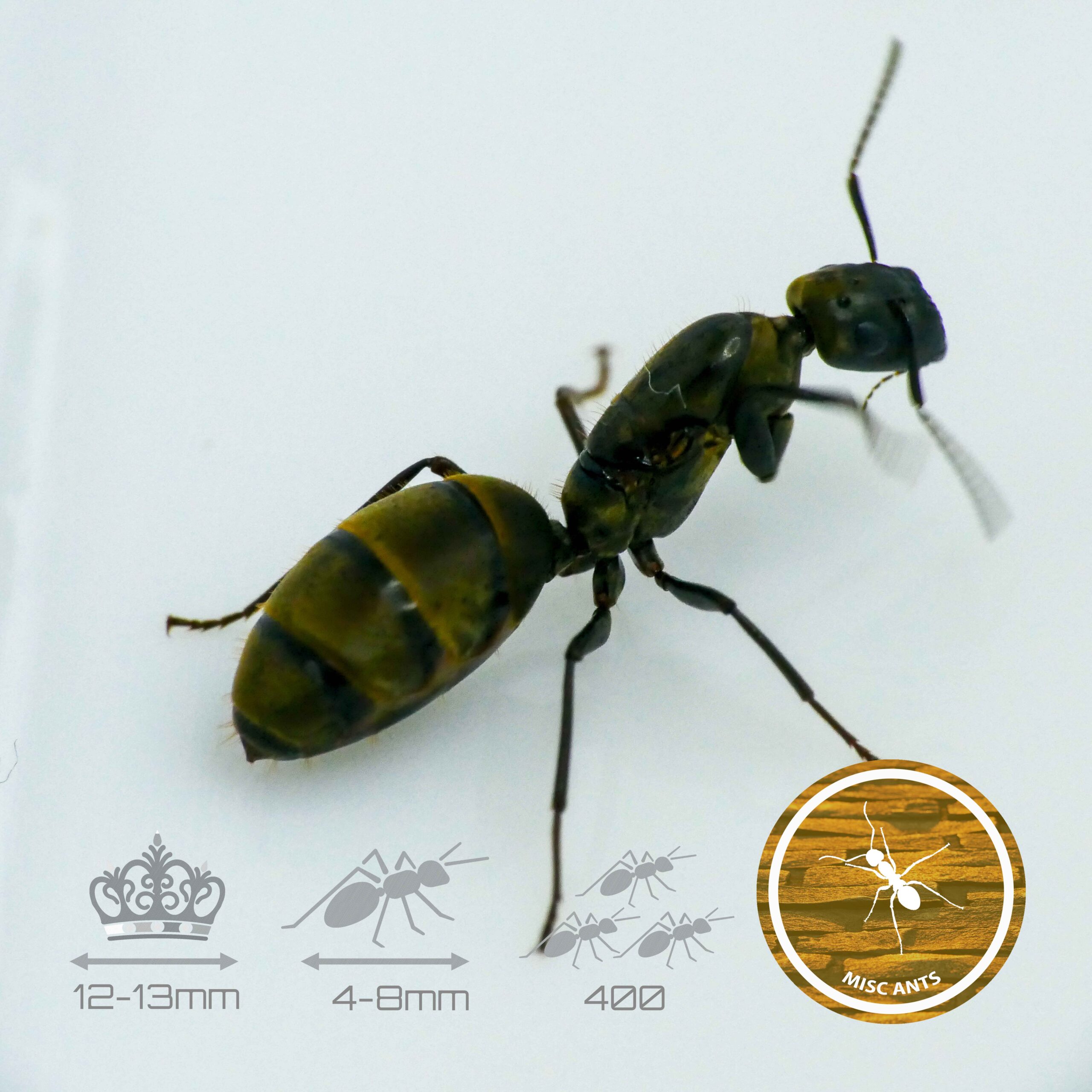
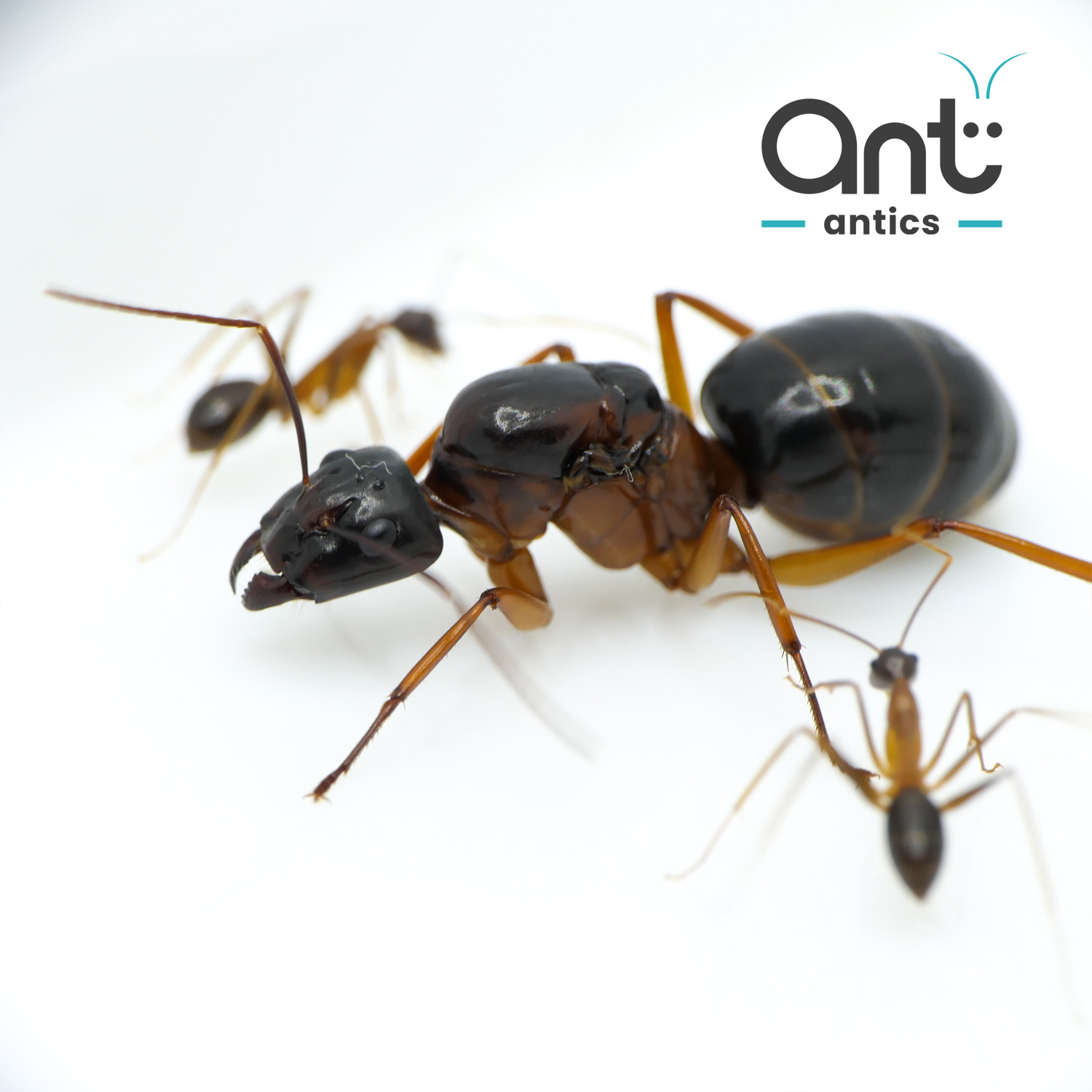
Camponotus ocreatus is a polymorphic carpenter ant of the southwestern United States and northern Mexico. A dark head against an orangey-brown body, large majors and nocturnal foraging make an attractive arid-land colony.
Rocky foothills and woodland edges
Emery described the taxon in 1893 (as a subspecies of C. maculatus; later raised to species). Mackay and Mackay (2002) record nests under stones in rocky loam, often on north-facing slopes and at forest edges in New Mexico foothills, oak-juniper woodland and pinyon pine. Wheeler and Wheeler (1986) list southern Nevada records from Hot Desert and Pinyon-Juniper, with nests under stones or as open craters of excavated earth. Foraging is nocturnal.
Colony:
- Type: Typically monogyne; occasional multi-queen reports in hobby literature (confirm for your stock)
- Founding: Fully claustral
- Mature size: Not firmly published; grows to a large western carpenter colony in hobby reports
Queen:
- Size: Hobby reports roughly 14-17 mm (Wheeler major worker length about 12 mm for comparison)
- Colour: Darker head; orangey mesosoma and gaster tones common
Workers:
- Size: Hobby reports roughly 6.5-9 mm for typical workers; majors up to about 14 mm
- Polymorphic: Yes
- Colour: Often blackish head with brown to orange remainder (colour varies)
Development:
- Egg to adult worker: Hobby figure around 4-6 weeks with proper heating (UNVERIFIED scientifically)
Housing:
- Nest: Under stones in rocky soil in nature; acrylic, plaster, ytong or similar dry-leaning setups
- Temperature: Keep warm; hobby targets often about 27-29°C active season (roughly 80-85°F)
- Humidity: Medium nest moisture; outworld on the dry side
Hibernation / Diapause:
- Notes: Sources disagree. Some southwestern sellers skip cold storage; others suggest a mild cool rest for higher-elevation stock. American desert carpenter guidance often favours a light winter slowdown rather than deep fridge diapause. Match locality (OPINION)
Diet:
- Primary: Constant sugars plus insects after workers appear
Interaction:
- Sting: No (Formicinae)
- Bite: Yes; majors can pinch; formic acid spray
Key Stats:
- Queen Size: Estimated: 14-17mm
- Worker Size: Estimated: 6.5-9mm (typical workers)
- Major Worker Size: Estimated: up to about 14mm
- Temperature: Estimated: 27-29°C (Nest) active season
- Humidity: Estimated: medium nest moisture; outworld on the dry side
- Diet: Sugars & Insects
- Colony Size: Estimated: large western carpenter colony (exact maximum unpublished)
- Diapause: Hobby sources conflict: many southwestern sellers skip fridge storage; higher-elevation stock may take a mild cool rest
Ready for a desert carpenter?
Warmth, sugars and protein, plus a dry-leaning outworld, suit Camponotus ocreatus. Watch for night activity and enjoy those orange-toned majors.

Reviews
There are no reviews yet.